Beats in the Barrel
How Music Is Tuning the Microbial Orchestra of Fermentation
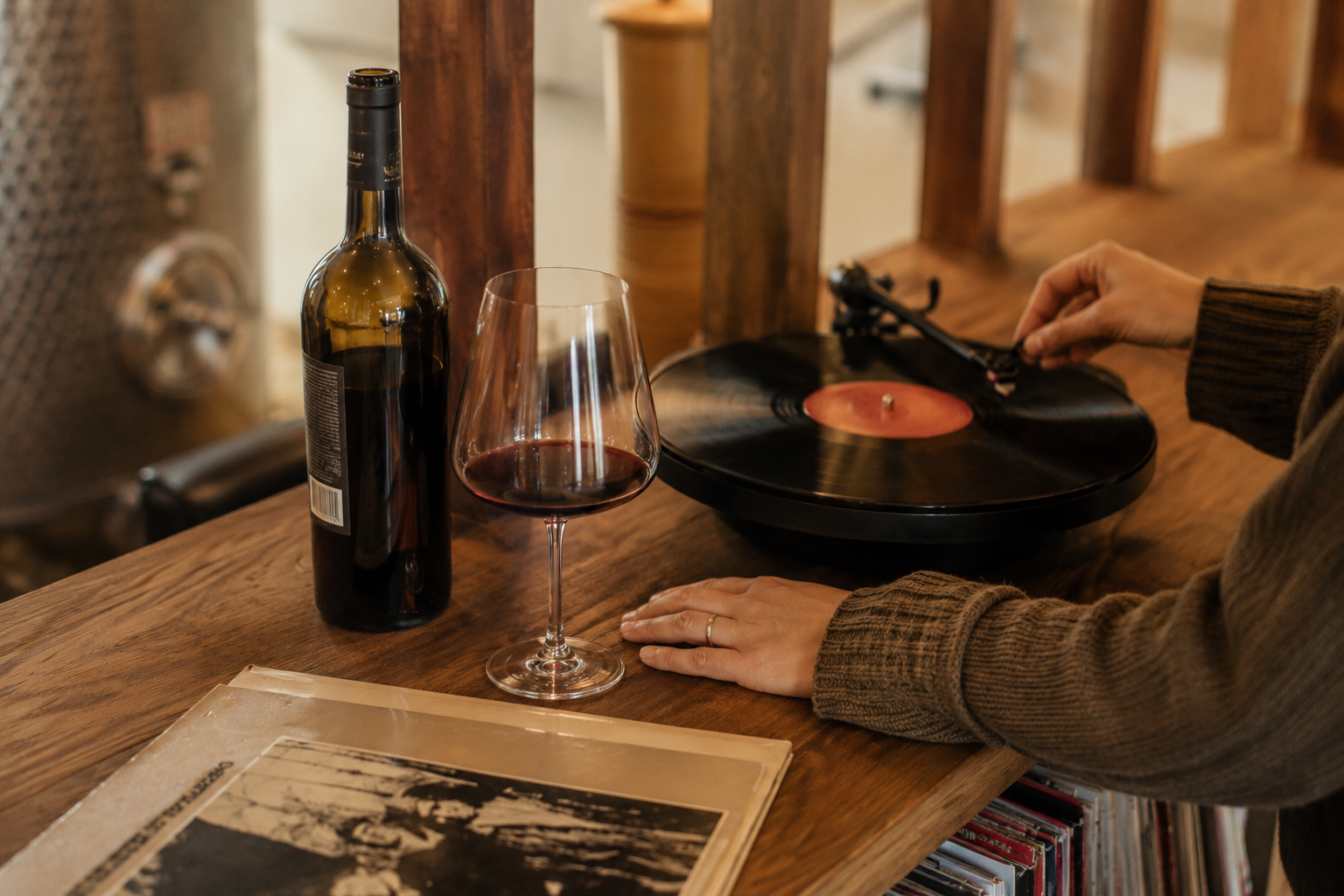
How Music Is Tuning the Microbial Orchestra of Fermentation
There’s a hum to fermentation that we often miss. Not the bubbling of kraut jars or the hiss of airlocks, but something quieter, stranger, more mysterious. A frequency beyond our ears, perhaps, where microbes move to an unseen rhythm.
But what if fermentation didn’t just have a hum, what if it had a beat?
Across kitchens, labs, vineyards, and bakeries, a curious question has been echoing through stainless steel vats and oak barrels: Can sound change fermentation?
From probiotic yogurt to jazz-brewed wine, a growing chorus of scientists, chefs, and winemakers believe the answer is yes.
In Iran, a team of food scientists exposed yogurt bacteria to “green music”, a blend of classical compositions interwoven with birdsong, flowing water, and wind. This was no folksy gimmick. The result? A noticeable increase in acidification rates, reduced incubation time, and faster pH drops in probiotic yogurt. But there was a trade-off: the same sonic stimulation decreased the number of live probiotic cells in the final product. In other words, music sped up the process, but tired the microbes out.
In the Rhône Valley of France, Raphael Pommier at Domaine de Cousignac has been serenading his wines with bespoke compositions. For him, fermentation is not just chemistry, it’s choreography. “Wine is like music,” he says. “To taste it, you need a little bit of volume.”
Each vintage gets its own soundtrack, composed by artists like French jazz legend Franck Tortiller or Chicago’s Mark Millett, who assigned grape varietals to instruments: Grenache to cello, Syrah to viola. The fermentation tanks throb gently with music as the sugars transform, guided by both yeast and melody.
Pommier believes sound frequencies stimulate the yeast, coaxing out subtler aromas and influencing minerality by increasing calcium uptake at the cellular level. The wines are said to harmonize, not just balance, with each grape and note complementing the other like parts of a jazz ensemble improvising in perfect time.
Markus Bachmann, a Viennese restaurateur and former orchestra trombonist, took it a step further. He dropped loudspeakers right into the fermentation tanks. The yeast weren’t just hearing the music, they were bathing in it.
He calls them Sonor Wines, and the results are wild: higher alcohol content, fuller texture, complex aromatics, and yeast populations up to 30% more active than in silent controls. The secret? According to Bachmann, sound waves break large CO₂ bubbles into smaller ones, creating more consistent fermentation temperatures and a smoother ride for the microbes.
“You can taste the difference,” he says, though not everyone agrees. Scientists remain skeptical, citing limited controlled trials. But Bachmann doesn’t mind. He’s already composing new playlists, for Sonor Beers.
In a quiet corner of Frankenwinheim, Germany, a baker set up what he calls a “flavor studio”: a space where loaves rise to the pulse of hard rock and other genres, their textures shaped by decibels as much as dough. Meanwhile in Yamagata, Japan, miso matures gently to the compositions of Bach, steeped not only in time and salt, but symphony.
And yet, what happens when we strip away the poetry and test the idea under sterile lab lights?
A 2021 University of Auckland study immersed beer fermentation bags in water tanks with underwater speakers, testing frequencies from 200 to 2000 Hz at different decibel levels. Surprisingly, silence won out, at least when it came to yeast count and fermentation speed. But some VOCs (the compounds responsible for aroma and flavor) shifted slightly under sound treatment. Ethyl hexanoate, a fruity ester, was more abundant in some sound conditions.
So while the microbes didn’t exactly dance, they may have hummed, quietly changing the song of the final beer.
At Harvard, artist-scientist Joshua Rosenstock built the Fermentophone, an installation of bubbling fermentation jars rigged with underwater mics. The carbon dioxide from fruit and veggie ferments was transformed into electronic music in real time. Each jar sang its own microbial melody, shaped by sugar levels and microbial behavior.
The result? A literal translation of fermentation into sound and a sonic expression of biology.
Rosenstock’s work reminds us: fermentation is never silent. Whether it’s bubbling kimchi or burping sourdough, there is always sound. We’re only just learning to listen. As AI and quantum biology begin to enter the fermentation scene, who’s to say music won’t become a standard tool? Imagine adaptive soundtracks that shift based on real-time yeast behavior. Or playlists tuned to maximize polyphenol release in wine. Or sourdoughs that ferment best to lo-fi hip hop.
Might we one day receive Spotify links with our wines, having vintages scored in both taste and tune?
Because whether you’re a winemaker with a jazz obsession or a home fermenter curious about how Beethoven might shape your kimchi, one thing is becoming clear: microbes are more musical than we thought.
And perhaps fermentation isn’t just a science. Or an art. Perhaps it’s a kind of listening.
The microbial world doesn’t just respond. It resonates.
So the next time you brew, ferment, or age, press play. The microbes might just be listening.
Microbial Detectives
Mushrooms, microbiomes, and the slow biochemistry of fermentation are quietly transforming forensic science, offering a way to read the dead through what lives on after.
The Shape of Fermentation
Beyond aesthetics and tradition, the shape of a wine bottle subtly influences microbial behavior, aging dynamics, and chemical interactions. More than design — this is fermentation science in glass.
Gut Feelings
Over ninety percent of the body's serotonin is made in the gut, not the brain. A growing science of the gut-brain axis suggests fermented foods and the microbes inside them may be quietly shaping mood, memory, and mental health.
© 2026 The Fermentalist.
For questions, feedback, or correspondence: hello@thefermentalist.co